
You have an outdated webbrowser. The website might not work correctly.
A sashimi knife is a long kitchen knife designed to cut and prepare sashimi, which is a Japanese dish consisting of wafer-thin slices of meat and fish. Sashimi knives are not actually a type of knife. It is a collective term for all long, Japanese kitchen knives that can be used to cut sashimi. The yanagiba knife and the sujihiki knife, for instance, are both sashimi knives. To make things easy, this page contains all Japanese kitchen knives that can be used to cut sashimi. You will find sashimi knives from Kai, Miyabi and Eden amongst others.


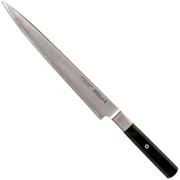

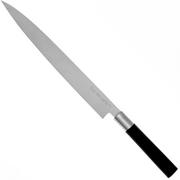

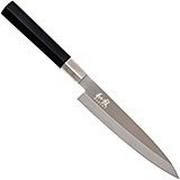

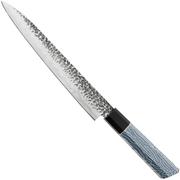

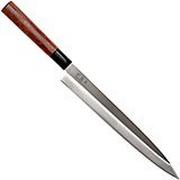

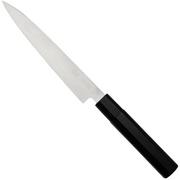

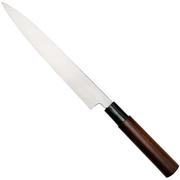

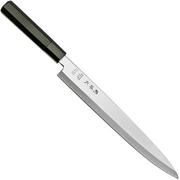

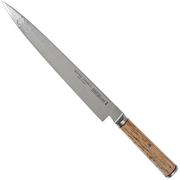

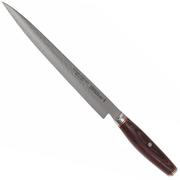

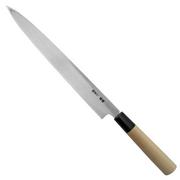

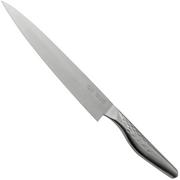

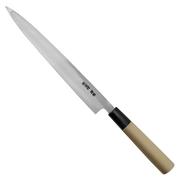

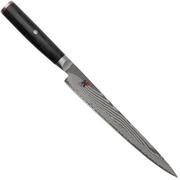


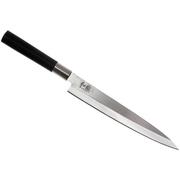


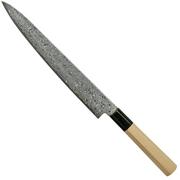

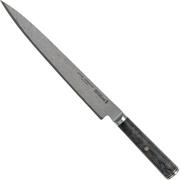

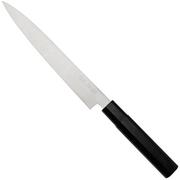

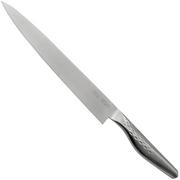

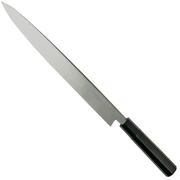


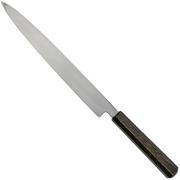


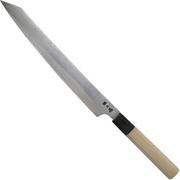

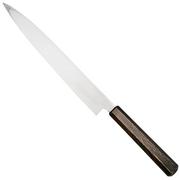

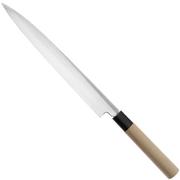

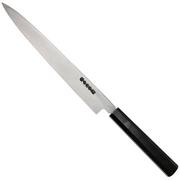

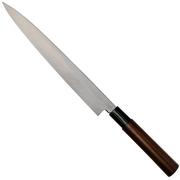

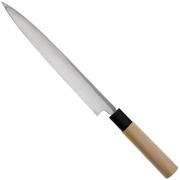

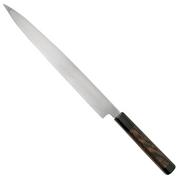

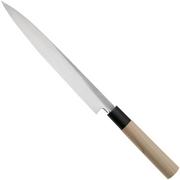

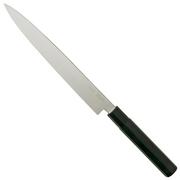

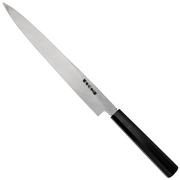

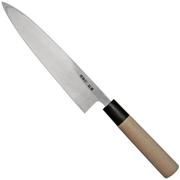

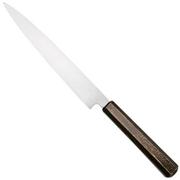


A knife for sashimi has one purpose: cutting wafer-thin slices. It is the result of the long, low blade that is often sharpened on one side. With long cutting movements you make only one movement per slice with which you decrease the chances of tears or uneven slices. The low-profile blade and single-bevel edge ensure that the slices won't stick to the blade, decreasing the chances of tears even more. For the best wafer-thin slices a sashimi knife is indispensable in your kitchen.
A Japanese sashimi knife is not actually a single, specific type of knife, but rather a collective term for long Japanese kitchen knives designed for slicing sashimi. For example, both yanagiba knives and sujihiki knives are considered types of sashimi knife.
If you're looking for a good sushi knife for preparing sashimi, nigiri or other refined sushi dishes, you'll most likely end up choosing one of these long Japanese knives. That's why sashimi knives are often grouped together with sushi knives, although they were originally developed specifically for cutting wafer-thin slices with exceptional precision.
For sashimi knives the following applies: size matters. Specifically, the length of the blade is very important. With a longer blade, it is easier to cut thin slices of a large fish. A larger knife, however, is more difficult to handle when you cut a small piece. Similarly, you have a lot of control with a shorter Japanese sashimi knife but is more difficult to use when you cut a large piece of salmon or tuna.
Yanagiba knives have a single-bevel edge, allowing them to be sharpened to a much finer angle than double-bevel knives. This results in exceptional sharpness and incredibly precise, effortless slicing. Because the blade is sharpened on only one side, it's important to choose a yanagiba sashimi knife that's suitable for your dominant hand. To help you find the right knife, simply use the left-handed / right-handed filter on the left-hand side of this page.
If you'd rather not use a single-bevel knife, a sujihiki is an excellent alternative. Unlike a yanagiba, a sujihiki has a double-bevel edge, making it suitable for both left- and right-handed users without the need to choose a specific version.
Thanks to its long, narrow blade, a sujihiki is also ideal for slicing sashimi, sushi rolls and other delicate ingredients in a single, smooth cutting motion. While it was originally designed as a carving knife for meat and fish, many home cooks and professional chefs appreciate its versatility and use it as an all-round slicing knife.
Keeping your sashimi knife razor-sharp is essential for clean, precise cuts. The correct sharpening method depends on the type of knife you own, as single-bevel yanagiba knives require a different approach from double-bevel sujihiki knives.
Rather than covering everything here, we've put together a comprehensive guide to sharpening Japanese kitchen knives. It explains how to determine the correct sharpening angle, the different sharpening methods available, and the key differences between sharpening single-bevel and double-bevel blades. Whether you're using a whetstone or another sharpening method, you'll find everything you need to keep your knife performing at its best.
When people search for a sushi knife, they do not always mean the same type of knife. Sushi includes many different styles of preparation – from classic nigiri and sashimi to maki and modern variations such as California rolls. This means there is no single Japanese sushi knife that is suitable for every task. Depending on which ingredients need to be prepared and cut, different types of Japanese kitchen knives are used.
For raw fish, especially when preparing sashimi, long Japanese knives such as yanagiba or sujihiki are the traditional choice. These sushi knives allow for precise, clean cuts and are mainly used when fish fillets need to be sliced into even portions.
However, other types of knives also play an important role when preparing sushi. A nakiri, for example, is ideal for vegetables and is a great choice for vegetarian or vegan maki. Its straight blade makes it possible to create precise cuts in ingredients such as cucumber, daikon radish and other vegetables. Those looking for a versatile knife to prepare a variety of sushi ingredients will also find a santoku to be a reliable companion. This Japanese all-purpose knife is suitable for cutting vegetables, herbs and other ingredients used in sushi rolls.
A deba knife can also play an important role in sushi preparation. This traditional Japanese knife is primarily used for preparing fish, for example when breaking down and preparing whole fish. Combined with a suitable filleting or sashimi knife, it creates a set of tools that can cover many steps in Japanese cuisine.
Anyone looking to buy a sushi knife should therefore first consider what type of sushi they want to prepare and which cutting tasks they will perform most often. For passionate sushi enthusiasts, a sushi knife set with several Japanese knives can be an interesting option, while for specific tasks, a carefully selected individual knife is often the best choice. The term “sushi knife” therefore describes an area of use rather than a specific type of knife.
Japanese sushi knives are valued above all for their sharpness, precision and the traditional craftsmanship behind Japanese blades. The right choice depends on the ingredients, the desired cutting technique and the user’s experience in the kitchen.


